
TruDAC
A digital drive interface that breaks the ground path between your controller and amplifier.
TruDAC Datasheet All Software ModulesA digital drive interface that breaks the ground path between your controller and amplifier.
TruDAC Datasheet All Software ModulesThe TruDAC (true digital-to-analog) is a digital drive interface that replaces the traditional analog drive connections by breaking the ground path between your controller and amplifier. TruDAC simplifies, isolates, and future-proofs your vibration system. Convert from digital to analog in order to reduce noise, support longer cable runs, and detect connection issues.
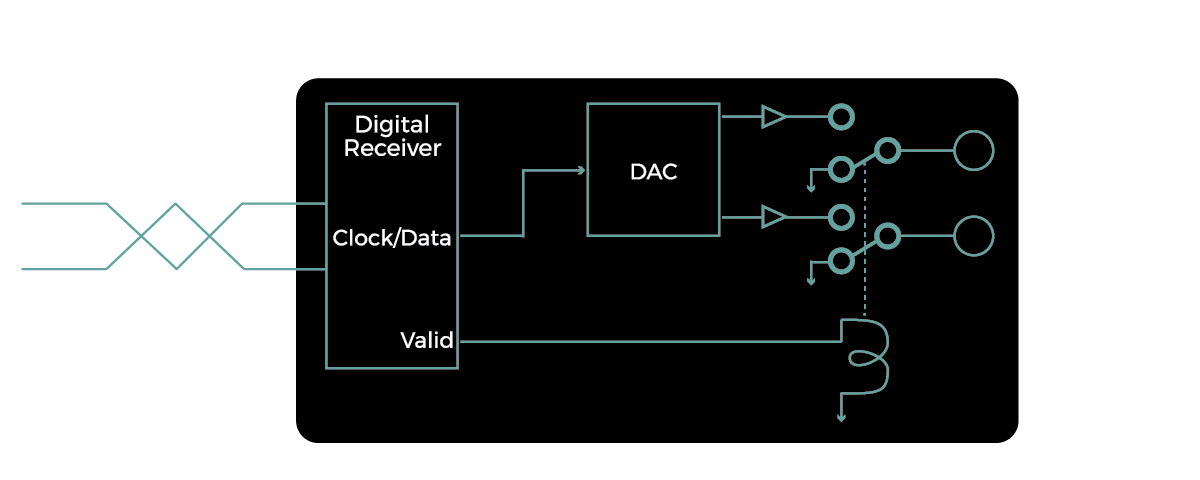
TruDAC supports one or two drive outputs through one digital link. It detects disconnected or broken cables between the amplifier and controller; the amplifier input remains grounded until the digital receiver locks onto the control signal. In the future, TruDAC will enable direct digital amplifier control instead of A/D conversion.
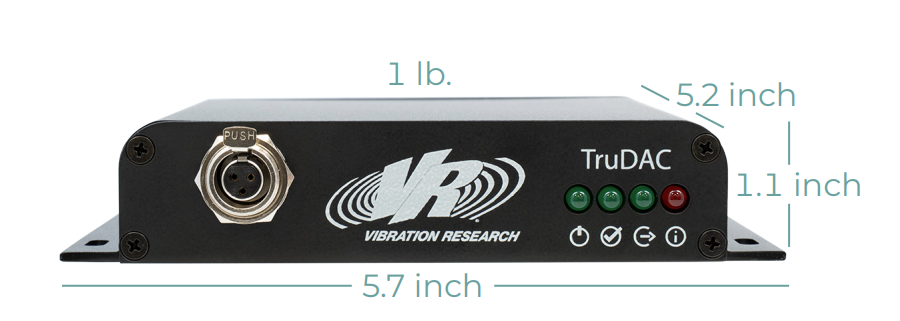
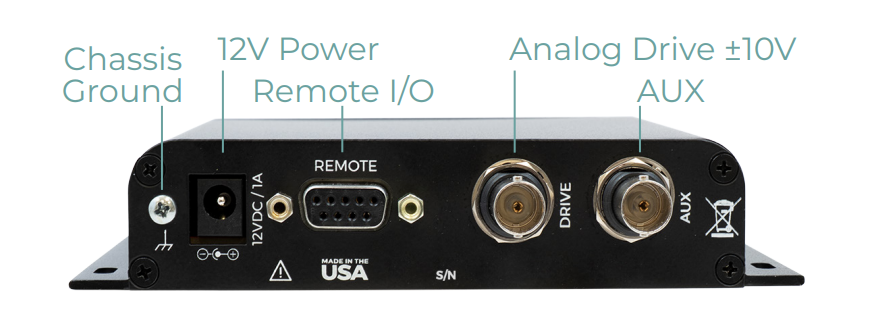
The TruDAC breaks the ground path between the controller and the amplifier, preventing ground loops and electrical noise. Its transformer-coupled digital input separates ground references operating at different potentials, and its analog outputs are fully isolated from ground.
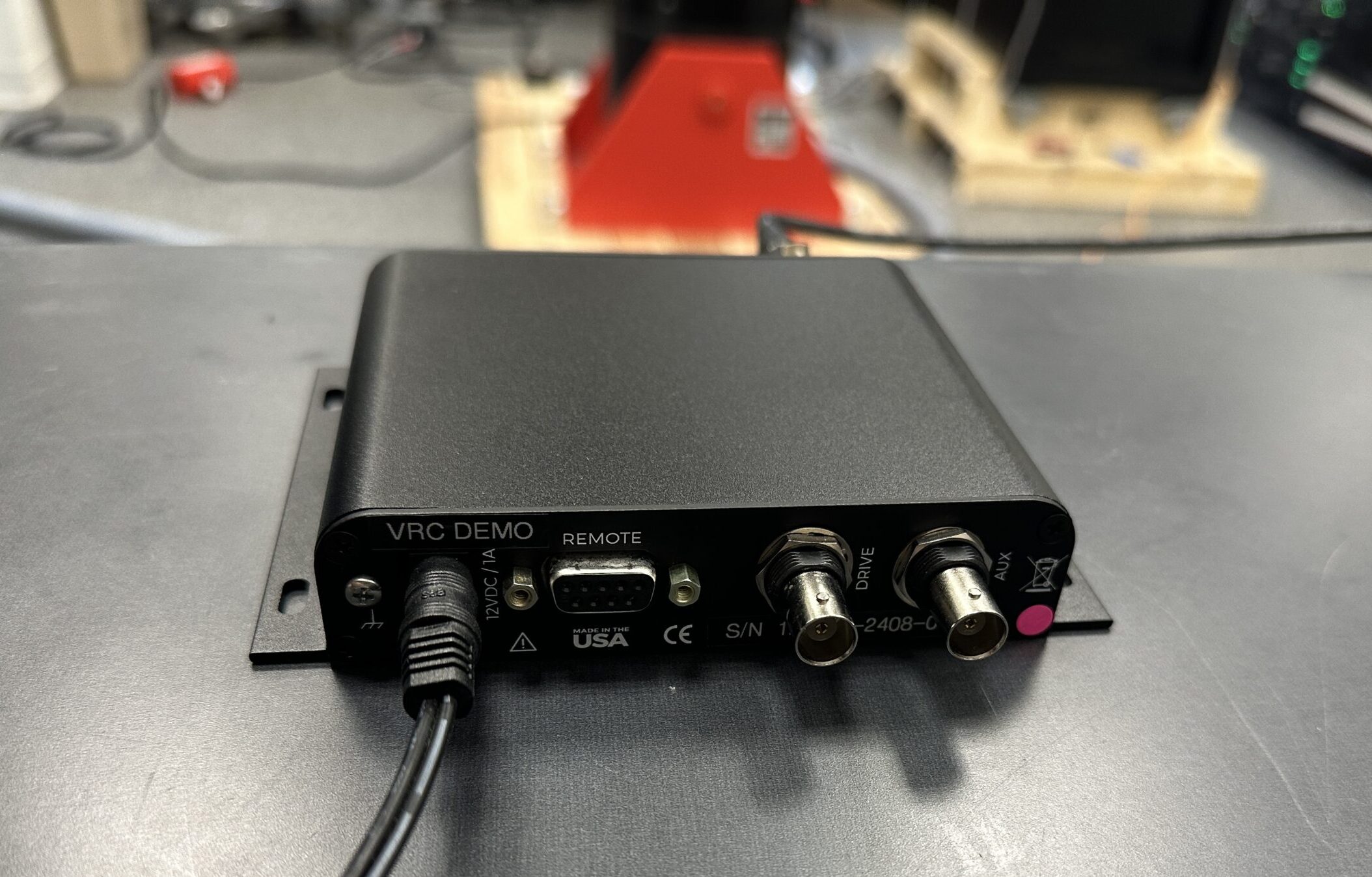
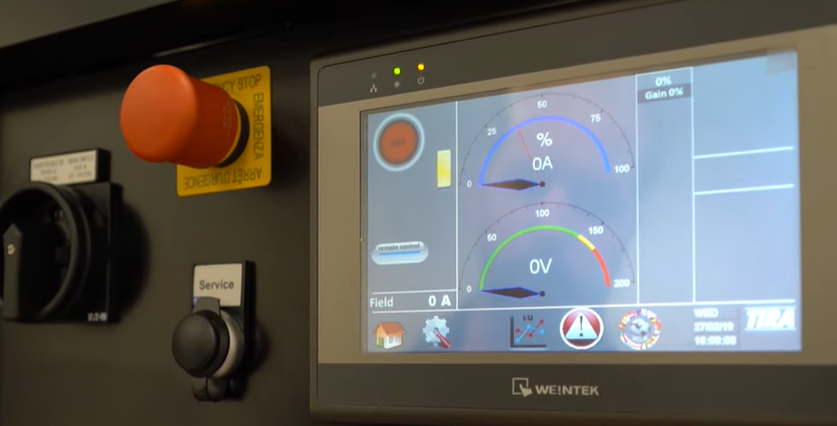
TruDAC is a safer alternative to analog BNC drive cables. If the TruDAC signal is compromised, the analog signal is safely disconnected from the amplifier, while an intermittent BNC analog drive cable may damage your shaker.
The TruDAC implements the IEC958 standard for professional electrodynamic amplifier applications.
The world has gone digital, yet many vibration labs still rely on analog drive paths that convert digital signals to analog, only to re-digitize them via the amplifier. TruDAC helps maintain a clean signal between a system’s vibration controller and amplifier.
TruDAC also supports a direct digital interface for future amplifier upgrades. As amplifier manufacturers begin to support digital input directly, the TruDAC’s entire signal path will be digital, eliminating unnecessary conversions.
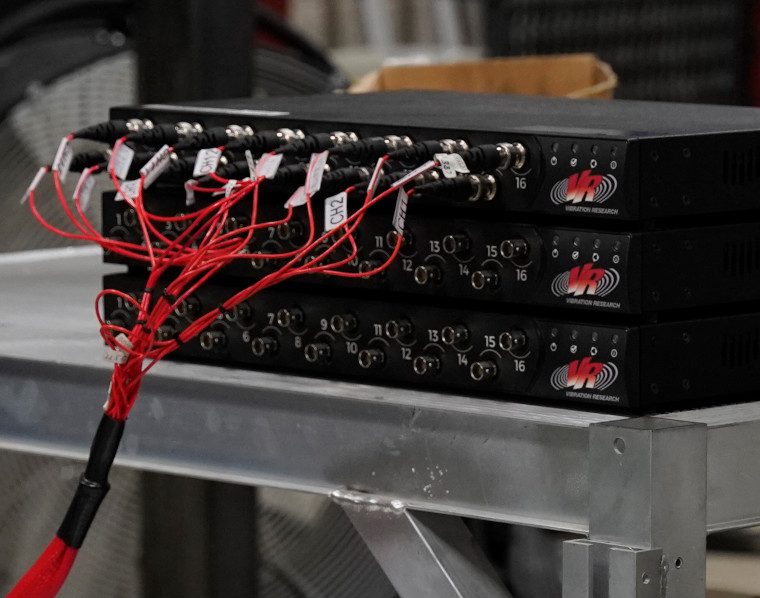
For environments where data integrity and timing accuracy impact control performance, TruDAC ensures consistent and uninterrupted delivery every time.
In the future, TruDAC enables direct digital amplifier control, instead of A/D conversions.
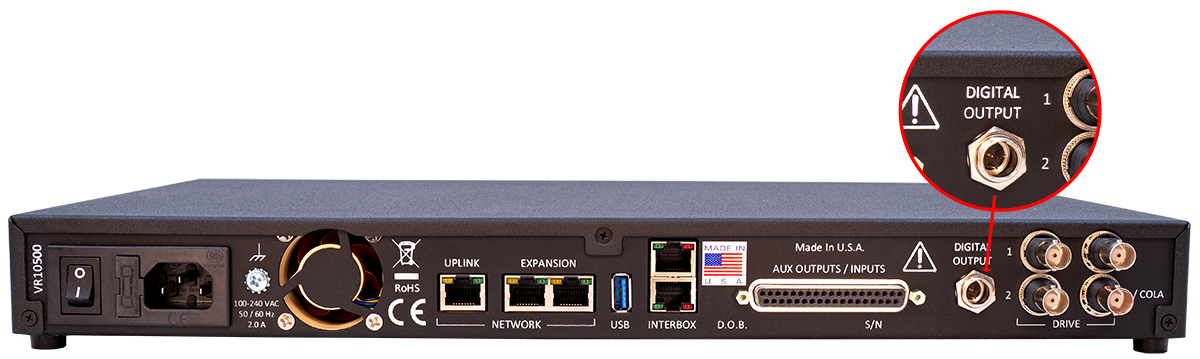
TruDAC includes two ±10 V analog outputs (DRIVE and AUX) that are compatible with most vibration amplifiers. While the drive path is digital up to the TruDAC, it outputs analog for backward compatibility.
Most systems convert signals like this:
Digital → Analog (Controller) → Analog → Digital (Amplifier)
Every conversion risks distortion and noise. TruDAC keeps the signal cleaner, and it’s the first step toward a fully digital amplifier ecosystem.
Software: VibrationVIEW 2025.1 and newer
Controller: VR9700, VR10500
Cable: Shielded twisted pair AES/EBU-style digital cable with a mini-XLR connectors (included)
Power: 12V power adapter or DB9 remote power interface (included)
| Feature | AES3 (TruDAC) | S/PDIF | Analog |
| Transmission Type | Balanced digital | Unbalanced digital | Unbalanced/balanced analog |
| Bit Accuracy | Guaranteed | Generally | None |
| Noise Immunity | Excellent | Moderate | Poor |
| Cable Length | Long (tens of meters) | Short (meters) | Varies; quality-dependent |
| Jitter/Timing | Low; deterministic | Higher; consumer-grade | Not applicable |
| Reliability in Industrial Environments | Excellent | Limited | Poor |
| Ideal Use | Precision control signals; vibration labs | Home/consumer audio | Monitoring; legacy interfaces |